Assistant Professor · Natural Language Processing
Department of Systems and Computing Engineering — Universidad de los Andes
Building language technology for underrepresented communities and advancing human-centered AI.
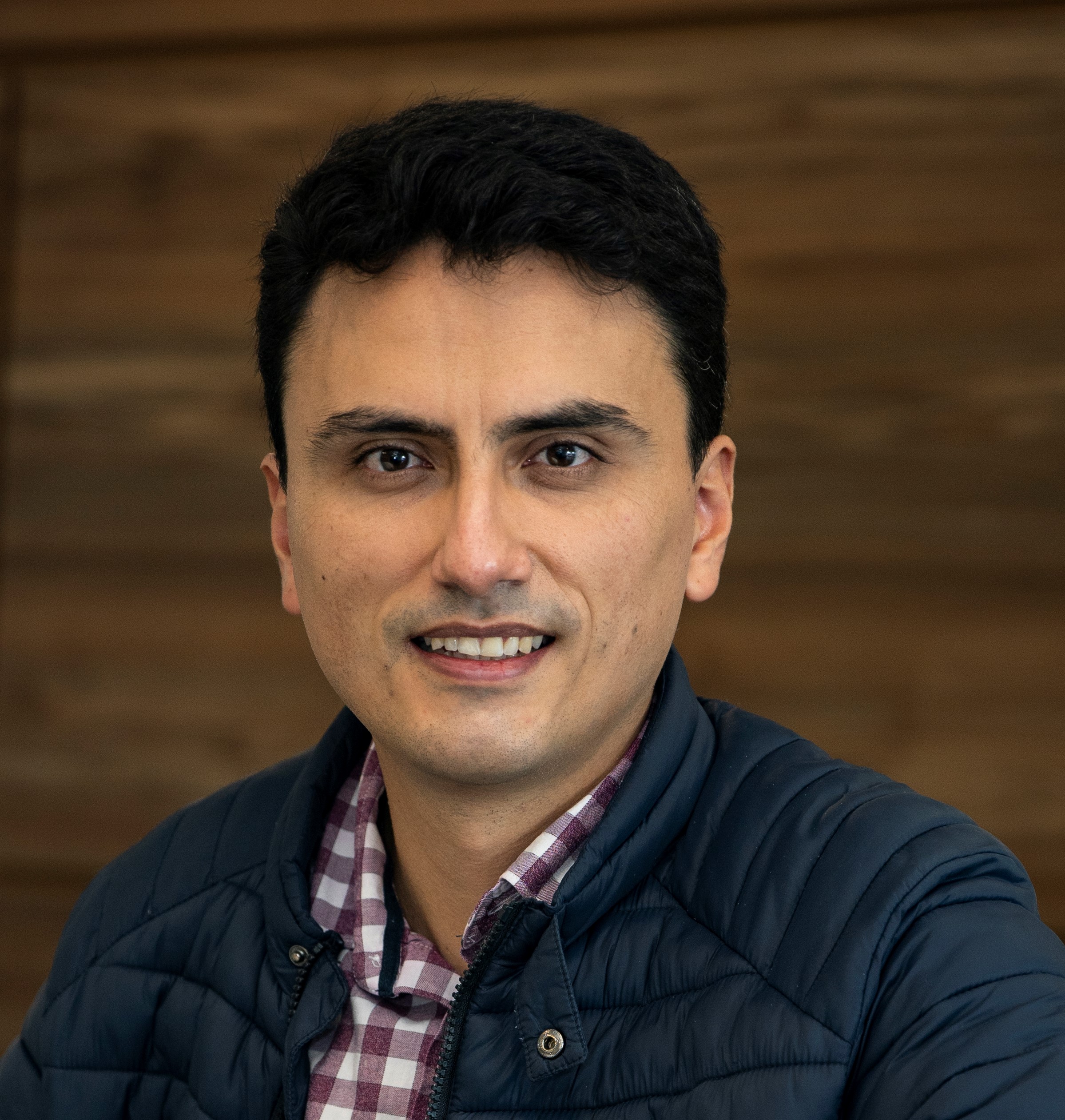
I am an Assistant Professor in the Department of Systems and Computing Engineering at Universidad de los Andes, where I founded and lead the Natural Language Processing (NLP) research line — the first dedicated NLP research program in the department. My work focuses on building language technology for underrepresented communities, developing cooperative multi-agent AI systems, and advancing human-centered NLP applications across education, medicine, and the humanities.
My academic journey began with a B.Sc. in Electronic Engineering from Universidad Distrital Francisco José de Caldas (2009). I continued with an M.Sc. in Systems and Computing Engineering from Universidad Nacional de Colombia (2013), followed by a Ph.D. in Engineering from Universidad de los Andes (2019), where my doctoral research on Semantic Web technologies and concept-prerequisite learning established the foundations of my current research agenda.
Before joining Uniandes in 2021, I spent nearly two years as an AI Engineer at Reconoser ID, leading the development of facial recognition and voice anti-spoofing systems adopted by major fintech companies. Since joining the University, I have supervised 18 master's theses and 44 undergraduate projects, published 48 research works in top venues including NeurIPS, AAAI, EMNLP, and IEEE Transactions on Artificial Intelligence, and established an internationally recognized research group in NLP. In 2023, I became the first NVIDIA Deep Learning Institute Ambassador in Colombia, reaching Platinum level in 2025.
B.Sc. Electronic Engineering
Universidad Distrital Francisco José de CaldasSoftware Engineer & IT Coordinator
Center for Research for Development (CID)M.Sc. Systems & Computing Engineering
Universidad Nacional de ColombiaPh.D. Engineering
Universidad de los AndesAI Engineer — Facial recognition & voice anti-spoofing
Reconoser IDAssistant Professor
Universidad de los AndesFirst NVIDIA DLI Ambassador in Colombia
Platinum level, 2025Introduction to Programming
UndergraduateTeachingStructural Mathematics and Logic
UndergraduateTeachingDesign and Analysis of Algorithms
UndergraduateDesign & TeachingObject-Oriented Design and Programming
UndergraduateTeaching
Natural Language Processing
MISISCreation & CoordinationMachine Learning Techniques
MISISCoordination & TeachingMastering Machine Learning
MISISTeachingSemantic Web
MISISCoordination & TeachingIntroduction to Contemporary Artificial Intelligence
MAIATeaching
Fundamentals of Natural Language Processing
MAIACreation & Coordination
Advanced Models of Natural Language Processing
MAIACreation & CoordinationSemantic Web
MAIACreation & CoordinationProcesamiento de Lenguaje Natural con Machine Learning
EDCODesign & CoordinationDominando la Inteligencia Artificial: más allá de ChatGPT
EDCODesign & CoordinationDesarrollador de Soluciones de IA (Azure Open AI)
EDCODesign & CoordinationProcesamiento de Lenguaje Natural
EDCODesign & CoordinationFirst DLI Ambassador in Colombia · 19 workshops delivered · 1,188 students trained · 960 certified
I founded the NLP research line at Universidad de los Andes — the first dedicated NLP initiative in the Department of Systems and Computing Engineering. What began before the LLM boom has grown into a nationally and internationally recognized research program, producing publications at NeurIPS, AAAI, EMNLP, and IEEE Transactions on Artificial Intelligence, and training over 90 researchers and students.
Cristian Adrián Martínez
In Progress · Year 1Machine translation and computational methods for low-resource Colombian indigenous languages.
Manuel Alejandro Mosquera Ortega
In Progress · Year 2Solving planning problems via World Models — building LLM-based agents with explicit world representations for multi-step reasoning.
Edier Becerra Álvarez
In Progress · Year 2Large language models and gamified strategies for building virtual assistants and AI-powered tutoring systems.
This project develops Transformer-based neural machine translation models and parallel corpora for Wayuunaiki, Arhuaco, Inga, and Nasa — advancing digital preservation and linguistic revitalization for Colombia's indigenous communities. It is the first national effort to release open NMT models and corpora for these languages and achieved a landmark first appearance in the AmericasNLP workshop.
Mosquera et al. (AAAI 2026). Improving Low-Resource Translation with Dictionary-Guided Fine-Tuning and RL: A Spanish-to-Wayuunaiki Study.
Salazar, Manrique & Pereira Nunes (SN Computer Science, 2025). Machine Translation Strategies for Low-Resource Colombian Indigenous Languages.
Prieto et al. (AmericasNLP 2024). Translation systems for low-resource Colombian Indigenous languages, a first step towards cultural preservation.
A joint effort with faculty from Electronics and Biomedical Engineering, this project advances the understanding of cooperative behaviors, resilience, and social generalization in LLM-based multi-agent systems. It provides quantitative metrics for evaluating how agents withstand disruptions in mixed-motive scenarios — with contributions at NeurIPS (in collaboration with Google DeepMind) and in IEEE Transactions on Artificial Intelligence.
Smith et al. (NeurIPS 2025 D&B Track). Evaluating Generalization Capabilities of LLM-Based Agents in Mixed-Motive Scenarios Using Concordia.
Mosquera et al. (IEEE Trans. Artificial Intelligence, 2025). Can LLM-Augmented Autonomous Agents Cooperate? An Evaluation Through Melting Pot.
Chacon-Chamorro et al. (IEEE Trans. Artificial Intelligence, 2025). Cooperative Resilience in Artificial Intelligence Multiagent Systems.
In collaboration with the University of Luxembourg and the Faculty of Medicine at Uniandes, this project develops an LLM-powered virtual patient system to train clinical communication skills in medical students. The platform simulates realistic patient interactions using adaptive reasoning and contextual memory, offering immediate scenario-specific feedback. Work also extends to medical text simplification for health literacy.
Laverde et al. (CSBJ, 2025). Integrating large language model-based agents into a virtual patient chatbot for clinical anamnesis training.
Arias Russi et al. (TSAR 2025). A Multi-Agent Framework with Diagnostic Feedback for Iterative Plain Language Summary Generation from Cochrane Medical Abstracts.
An interdisciplinary effort with the Department of History, this project applies computational NLP to historical Spanish texts to uncover cultural and linguistic transformations. Work spans corpus construction with LLM-assisted OCR correction, semantic shift detection, irony detection, and gender semantics — producing open datasets and novel tools for digital humanities research in Latin America.
Cohen, Manrique-Gómez & Manrique (NLP4DH 2025). Historical Ink: Exploring Large Language Models for Irony Detection in 19th-Century Spanish.
Manrique-Gómez et al. (NLP4DH 2024). Historical Ink: 19th Century Latin American Spanish Newspaper Corpus with LLM OCR Correction.
Montes et al. (EMNLP Workshop LChange 2024). Historical Ink: Semantic Shift Detection for 19th Century Spanish.
Motivated by concerns from Colombian voice actors about AI-generated audio forgeries, this project addresses the lack of linguistic diversity in speaker verification research. We introduced HABLA — the first voice anti-spoofing dataset for Latin American Spanish, with over 22,000 authentic and 58,000 spoofed speech samples across five countries. The dataset and baseline models are openly released.
Tamayo, Manrique & Pereira Nunes (Interspeech 2023). HABLA: A Dataset of Latin American Spanish Accents for Voice Anti-spoofing.
Click a topic to filter publications
Founded in 2021 at the Department of Systems and Computing Engineering, Universidad de los Andes. The first dedicated NLP research line in the department, focused on language technology for underrepresented languages, multi-agent AI systems, and human-centered NLP applications.
Part of the FlagLab research group · Uniandes
Cristian Adrián Martínez
Machine translation for low-resource Colombian indigenous languages
Manuel Alejandro Mosquera Ortega
Planning via World Models in LLM-based agents
Edier Becerra Álvarez
LLMs and gamified strategies for virtual assistants
Co-edited with Professor Juan David Gutiérrez (School of Government), this interdisciplinary book brings together 36 authors from across the faculties of Universidad de los Andes. Organized around theoretical and methodological foundations, applications and societal impacts, and the interactions between AI and the State, it is the first comprehensive effort to compile the most relevant AI research from University faculty — a 19-month project with rigorous international peer review, launched on October 31, 2025.
Interested in collaboration, research partnerships, or speaking invitations?